


From Summer Camp Counselor to Board Certified Therapist: Nicole Rojas’ Career at Easterseals Central Illinois
Starting with a summer at Timber Pointe Outdoor Center, Nicole Rojas built a career in ABA therapy and recently earned her BCBA credential—an inspiring example of what’s possible at Easterseals Central Illinois.
When Nicole Rojas first came to Easterseals Central Illinois, she wasn’t mapping out a long-term career in Applied Behavior Analysis. She was simply looking for a summer job.
Today, Nicole is a Board Certified Behavior Analyst (BCBA), having officially passed the Board Certified Behavior Analyst exam — a rigorous, graduate-level certification exam administered by the Behavior Analyst Certification Board. With national first-time pass rates averaging 50-60%, the exam represents a significant professional milestone. Most candidates spend months preparing while completing graduate coursework and supervised fieldwork hours. For Nicole, earning her BCBA credential reflects years of growth, dedication, and perseverance.
Applied Behavior Analysis (ABA) is a therapeutic approach rooted in the science of learning and behavior. In pediatric settings like Easterseals Central Illinois, ABA clinicians work primarily with children to help them build meaningful life skills — including communication, social interaction, emotional regulation, independence, and daily living skills. Treatment plans are highly individualized; clinicians assess each child’s unique strengths and needs, design targeted goals, collect and analyze data during therapy sessions, and adjust strategies to ensure steady progress. For many families, ABA therapy supports their child in gaining skills that increase independence at home, in school, and in the community.
“I currently work as a Board Certified Behavior Analyst. A typical day for me consists of supervision of clients and Registered Behavior Technicians, reviewing session data and making changes to programming, and documenting supervision and session events.”
But Nicole’s story didn’t begin in a clinic. It began at the lake.

A Summer at Timber Pointe Outdoor Center
Nicole was in college and struggling to find a summer job. A friend encouraged her to apply as a program counselor at Timber Pointe Outdoor Center. She had no camp experience — but the idea of spending the summer at the lake was enough to take the leap.
“I was looking for a summer job in college and was having no luck finding one,” Nicole said, “My best friend encouraged me to work with her at Timber Pointe as a program counselor for the summer. I had no camp experience, but I was intrigued by living at the lake for the summer, so I went for it!"
Timber Pointe Outdoor Center is Easterseals Central Illinois’ fully accessible camp and recreation facility, designed so children and adults with disabilities can participate in outdoor experiences that might otherwise be out of reach. Through adaptive programming, inclusive activities, and individualized support from trained staff, campers build confidence, independence, and social connections in a setting where they are encouraged to try new things and succeed on their own terms. For many staff members, it’s also a first introduction to working alongside individuals with diverse needs — and to the impact supportive environments can have on growth and inclusion.
"Working with the campers introduced me to so many wonderful and kind people and taught me how accessible and inclusive the world can be for others if we make the effort," Nicole said.
That summer sparked something bigger. Nicole discovered how meaningful it could be to support children as they developed new skills, gained confidence, and experienced success in ways they hadn’t before. The experience helped her realize she wanted a career working with children — she just wasn’t sure how.

Discovering ABA
After graduating college, and remembering how much she loved her time at Timber Pointe, Nicole explored other roles at Easterseals Central Illinois.
“I graduated college and truly had no idea the kind of job I wanted, all I knew was I wanted to work with children,” Nicole recalled, “I remembered how excited and happy I felt working at Timber Pointe and decided to see what other jobs Easterseals [Central Illinois] offered. I came across a position called ‘registered behavior technician’ and it sounded interesting. I did a bit of research on the job and the field of ABA and decided to apply. I still remember the call I received when I was offered the job and was so excited to start my journey as an RBT.”
As a Registered Behavior Technician (RBT), Nicole built her foundation in ABA therapy.
“My experience as an RBT was great and full of learning experiences,” Nicole said, “I had the opportunity to learn from several established RBTs and also develop my own style of connecting with clients while teaching skills and following their treatment plans. I learned the importance of remaining patient and calm across situations. I felt very supported as an RBT and could always reach out [to my supervising BCBA] for guidance or to talk something out.”
Taking the Next Step
After serving as a Lead RBT for a few years, Nicole found herself increasingly curious about the clinical decision-making side of ABA.
“I had been Lead RBT for a couple years when I decided to get my master’s degree. While I enjoyed the RBT life, I started becoming more interested in the BCBA side of ABA therapy – How did they come up with specific interventions? How did parent training work? How did they determine what goals to work on with each specific kiddo? There were so many questions I wanted to find out the answers to.”
That curiosity propelled Nicole into graduate school — and into the role of ABA Apprentice, a structured training position unique to Easterseals Central Illinois.
The ABA Apprenticeship program is designed to bridge the gap between RBT and BCBA, giving aspiring clinicians meaningful, supervised experience while they complete their graduate coursework and required fieldwork hours. Rather than learning solely in a classroom setting, apprentices at Easterseals Central Illinois are immersed in real-world clinical leadership from the start. They shadow BCBAs during supervisions and parent trainings, assist with evaluations, learn how treatment plans are developed, and gradually begin taking on more responsibility under close mentorship.
For Nicole, this stage marked a major shift.
“Going from RBT, ABA Apprentice, to BCBA has been quite the journey…” Nicole said.
As an Apprentice, Nicole’s direct therapy hours decreased, but her clinical lens expanded. She moved from implementing plans to helping design them. She gained experience writing programs, preparing reports, supporting parent communication, and eventually leading cases with BCBA oversight.
The role required more than technical knowledge — it required confidence, time management, and emerging leadership skills. It also allowed Nicole to grow within the organization that had first introduced her to the field, supported by supervisors and teammates who were invested in her long-term success.

The Grind — and The Payoff
Balancing graduate school, full-time work, and exam preparation was no small feat.
“Going through my graduate program, spending months studying for the exam, while also working a full time job was a long journey that tested me daily,” Nicole recalled, “I won’t lie, it was a grind! But seeing that word ‘Pass’ on my exam results made it all worth it! I was so excited to reach that milestone and see all the work I put in pay off.”
Along the way, Nicole leaned heavily on the support around her.
“Everyone working around me was a key person that contributed to my growth. From the BCBAs I received regular feedback, supervision meetings, and helpful knowledge/advice to grow my skills. From my fellow apprentice, we were able to relate to each other throughout the process and support each other as we managed grad school and caseloads. The RBTs were also very encouraging and helped me develop my leadership skills and program writing skills by asking questions.”
Why This Work Matters
Today, as a BCBA, Nicole finds fulfillment not just in clinical progress — but in the people who make it happen.
“I love seeing the RBTs give their support to the clients every day. I love seeing clients learn new skills in real time and make connections with those around them. I also enjoy speaking with parents and hearing how they’re noticing changes in their kids’ skills as therapy goes on.”

One experience in particular stands out.
“There a ton of moments that stick out to me. One that I look back on most fondly is when I watched the first client I ever met and worked with graduate from ABA therapy. I felt so proud of her and her growth throughout therapy.”
For those considering the field, Nicole offers simple but powerful advice:
“My biggest piece of advice would be to remember why you’re doing this job and remind yourself of it daily.”
Reflecting on her journey, Nicole is clear about the impact Easterseals Central Illinois has had on her career.
Working at Easterseals [Central Illinois] has truly taught me so much about this field and helped me develop skills. I would recommend it to anyone wanting to become a BCBA or work in the field of ABA.”
From camp counselor to BCBA, Nicole’s path is a powerful example of what’s possible when curiosity, mentorship, and perseverance come together — and when an organization invests in growing its talent.
___________________________________________________________________________________________________________________________
ABA Glossary: Understanding the Terms in Nicole’s Journey
Applied Behavior Analysis (ABA)
A therapy approach rooted in the science of learning and behavior. In pediatric settings, ABA helps children build skills such as communication, social interaction, emotional regulation, play skills, and independence in daily routines. Clinicians use data to measure progress and adjust strategies based on each child’s individual strengths and needs.
For example, if a child becomes frustrated and cries when they want a snack but cannot yet ask for it, an ABA team might teach that child how to request the snack using words, sign language, or a communication device. The clinician would break the skill into small, manageable steps, provide positive reinforcement when the child attempts to communicate, and track data each session to monitor progress. Over time, the goal is for the child to independently ask for what they need — reducing frustration and increasing confidence.
Board Certified Behavior Analyst (BCBA)
A graduate-level clinician who has completed required coursework, supervised fieldwork hours, and passed a national certification exam administered by the Behavior Analyst Certification Board (BACB).
BCBAs:
- Conduct assessments and develop individualized treatment plans
- Design behavior intervention strategies
- Provide parent and caregiver training
- Supervise and mentor RBTs and Behavior Technicians
- Analyze session data and adjust programming to ensure progress
In the example above, the BCBA would first conduct an assessment to understand why the child is crying — is it frustration from not being understood? Difficulty communicating? Limited vocabulary? The BCBA would analyze data, observe patterns, and identify the function of the behavior.
Based on that assessment, the BCBA would design an individualized treatment plan. This might include selecting the most appropriate communication method (spoken words, picture exchange, sign language, or a speech-generating device), determining how to break the skill into teachable steps, and outlining how and when reinforcement should be delivered.
The BCBA would then train the ABA team on how to implement the plan consistently, review session data regularly, and adjust strategies if progress stalls. They would also coach parents on how to reinforce the new communication skill at home — ensuring the child can generalize the skill beyond the therapy setting.
BCBA Exam
A national certification exam administered by the Behavior Analyst Certification Board (BACB). The exam assesses a candidate’s ability to apply behavior-analytic principles in real-world clinical situations. It is a rigorous, graduate-level exam with national first-time pass rates typically around 60% (and in some recent years closer to the mid-50% range). Most candidates spend months preparing while completing graduate coursework and supervised fieldwork hours.
Behavior Analyst Certification Board (BACB)
The national organization that sets professional standards and administers certification exams for behavior analysts, including the BCBA credential.
Registered Behavior Technician (RBT)
A nationally-credentialed paraprofessional who provides direct ABA therapy under the supervision of a BCBA.
RBTs:
- Work one-on-one with children during therapy sessions
- Implement treatment plans designed by the BCBA
- Collect data on skill acquisition and behavior
- Provide real-time teaching, reinforcement, and support
In the scenario above, the RBT would work directly with the child during therapy sessions to teach the communication skill outlined in the BCBA’s plan. When the child shows signs of wanting a snack, the RBT would prompt the child to use the selected communication method — whether that’s saying the word, handing over a picture card, using sign language, or pressing a button on a communication device.
The RBT would provide immediate positive reinforcement when the child attempts the skill, gradually fade prompts as the child becomes more independent, and collect detailed data on each opportunity — tracking how often the child requested appropriately and how much support was needed. The RBT’s consistency and moment-to-moment support are what help the child practice and master the skill over time.
Behavior Technician (BT)
A team member who provides direct therapy services under BCBA supervision. BTs may be working toward or maintaining their RBT credential while gaining hands-on clinical experience.
In our example, a BT would also work directly with the child during therapy sessions, implementing the communication plan designed by the BCBA. The BT would prompt the child to request the snack appropriately, provide reinforcement for successful attempts, gradually fade support, and collect data on each opportunity.
The primary difference between a BT and an RBT is certification. An RBT has completed a national credentialing process through the BACB, including specific training requirements and a competency assessment. A BT may be working toward their RBT credential or maintaining it while continuing to gain hands-on clinical experience.
In practice, both BTs and RBTs provide direct therapy under the supervision of a BCBA and play a critical role in helping children build new skills.
ABA Apprentice
A structured training role offered at Easterseals Central Illinois for team members pursuing their master’s degree in ABA or a related field. The ABA Apprentice position bridges the gap between RBT and BCBA by allowing clinicians to gain supervised experience in clinical leadership. Apprentices:
- Shadow BCBAs during supervisions and parent trainings
- Assist with evaluations and report writing
- Learn how treatment plans are developed
- Gradually take on case leadership responsibilities under close mentorship
What would an ABA Apprentice do in our scenario? The ABA Apprentice would operate in a hybrid role — still working directly with the child at times, but also stepping into supervised clinical responsibilities.
The Apprentice might:
- Observe sessions to ensure the communication plan is being implemented consistently
- Review the data collected by the RBT or BT to identify trends
- Assist the BCBA in refining the prompting hierarchy or reinforcement strategy
- Draft portions of the updated program under BCBA supervision
- Participate in parent meetings to help explain progress and next steps
- Practice leading supervision meetings while receiving feedback from the BCBA
For example, if the child begins requesting the snack independently 70% of the time, the Apprentice might analyze the data, suggest fading prompts further, or propose increasing the complexity of the communication goal — all while consulting with the supervising BCBA before changes are finalized.
The Key Distinction
- BCBA – Designs and approves the treatment plan; makes final clinical decisions
- Apprentice – Practices clinical decision-making under supervision; analyzes data, drafts plans, and begins leading aspects of care
- RBT/BT – Implements the plan directly with the child and collects data
In simple terms: mIf the BCBA is the architect and the RBT is the builder, the Apprentice is learning to become the architect — while still helping build.
10 Results
-

From Teaching Assistant to Certified Teacher: How Niccole Maloney Found Her Calling at the Easterseals Learning Academy
What happens when a passionate paraprofessional steps into her purpose? Meet Niccole Maloney, whose journey from aide to teacher shows the power of growing your career at Easterseals Central Illinois. -

Celebrating Our Physical Therapy Team
Every day, our Physical Therapy Team helps children build strength, confidence, and independence through movement. Their expertise, creativity, and compassion empower families and inspire progress across Central Illinois.
During Physical Therapy Month, we celebrate their dedication, teamwork, and the lasting impact they make—one milestone at a time. -

From the Clinic to the Cabin: Physical Therapist Meghan Park Reflects on Volunteering at MDA Summer Camp
Physical Therapist Meghan Park traded her therapy space for camp trails this summer as she volunteered at MDA Summer Camp. Read on to hear her reflections on the experience and the impact it had on both her and the campers. -

A Place Where She Belongs: How One Family Found Confidence and Community at Timber Pointe
What happens when a shy, reserved girl discovers a place where she’s fully understood—and fully herself? For Avery and her family, Timber Pointe Outdoor Center became more than just summer camp. It became a turning point. Read how one family found confidence, community, and a little bit of magic in the woods of Hudson, IL. -

From Patient to Leader: Molly Cull’s Journey in Pediatric Speech-Language Therapy at Easterseals Central Illinois
From patient to team leader, Molly Cull’s journey is a testament to the power of purpose-driven care. Learn how her experience shaped a thriving career in pediatric speech therapy—and how you can start your own. -

Celebrating National Volunteer Month: Spotlight on the Mid-Illini Bandits
Our Volunteers Make a BIG Impact! -
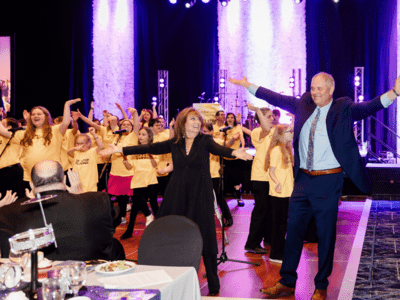
Tribute 2024 - Don't Stop Believing
Thank you for joining us for Don't Stop Believing, the 33rd Easterseals Tribute Dinner honoring Mark and Jodi Scott.
It was a beautiful night spent celebrating the kids and families of Easterseals Central Illinois and the incredible impact Mark and Jodi have had on them throughout their years of service. -

-
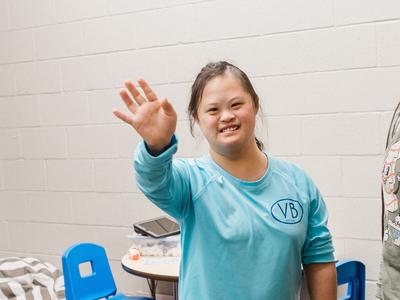
Meet Gia
She defied the odds with determination and the support of Easterseals Central Illinois! Discover how this inspiring 18-year-old is reclaiming her independence and chasing her dreams! -
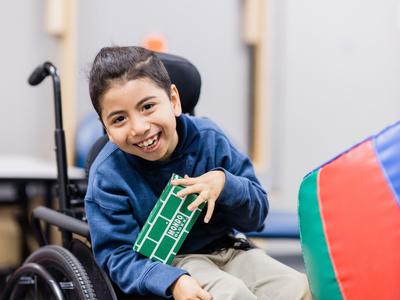
Meet Danylo
A courageous young individual making remarkable strides with the support of Easterseals Central Illinois. Discover his inspiring journey, the milestones he's achieved, and the amazing community that empowers his growth. Get ready to be inspired!


Sign up for Emails from Easterseals
Get exciting news, helpful resources, & inspiring stories delivered to your inbox each month.